> For the complete documentation index, see [llms.txt](https://doc.commandersact.com/llms.txt). Markdown versions of documentation pages are available by appending `.md` to page URLs; this page is available as [Markdown](https://doc.commandersact.com/features/destinations/destinations-catalog/adobe/adobe-analytics.md).
# Adobe Analytics
[Adobe ](https://www.adobe.com/)is an multinational computer software and web analytics company (See [Adobe Experience Cloud](https://business.adobe.com/)). Using this destination you can implement server-side tracking, by sending events to Adobe Analytics.
Please note that we use the Adobe [Bulk Data Insertion API](https://developer.adobe.com/analytics-apis/docs/2.0/guides/endpoints/bulk-data-insertion/).
### Authentication
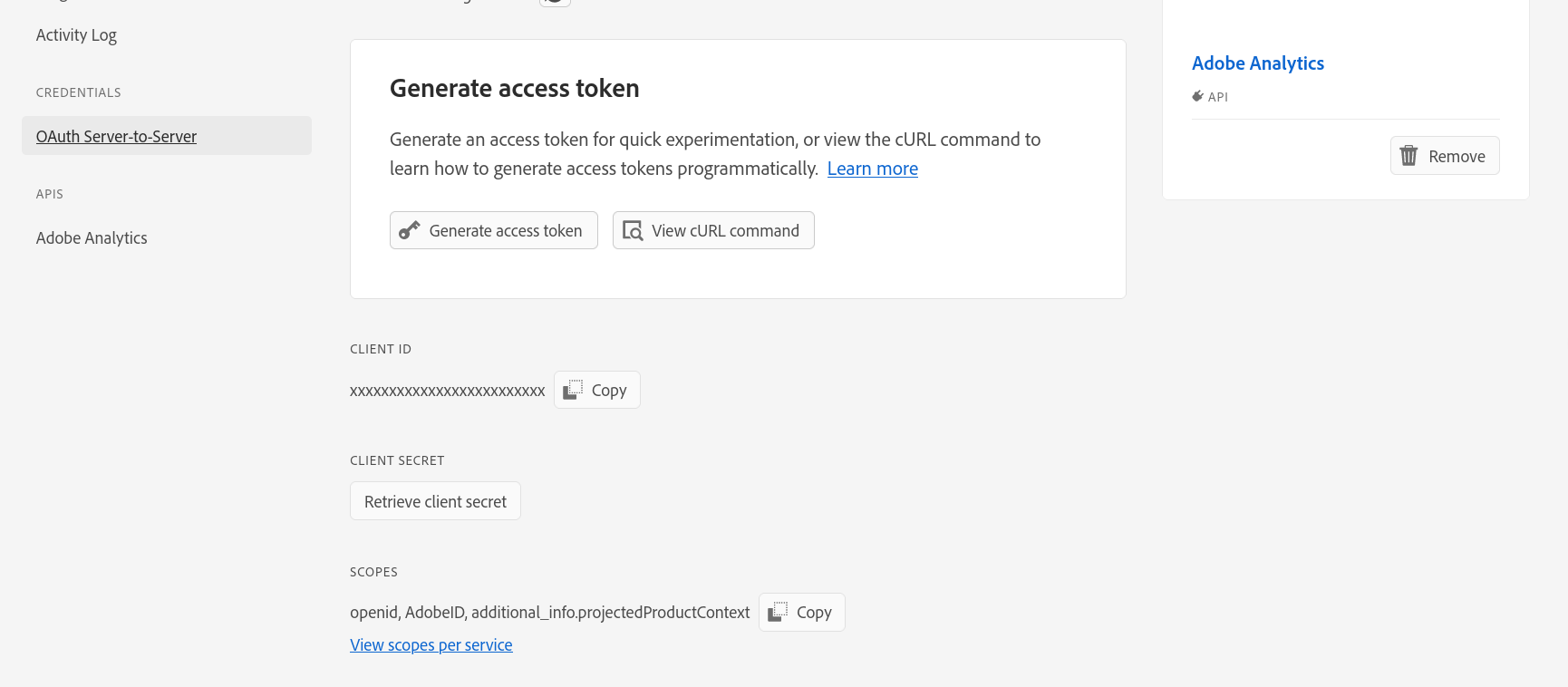
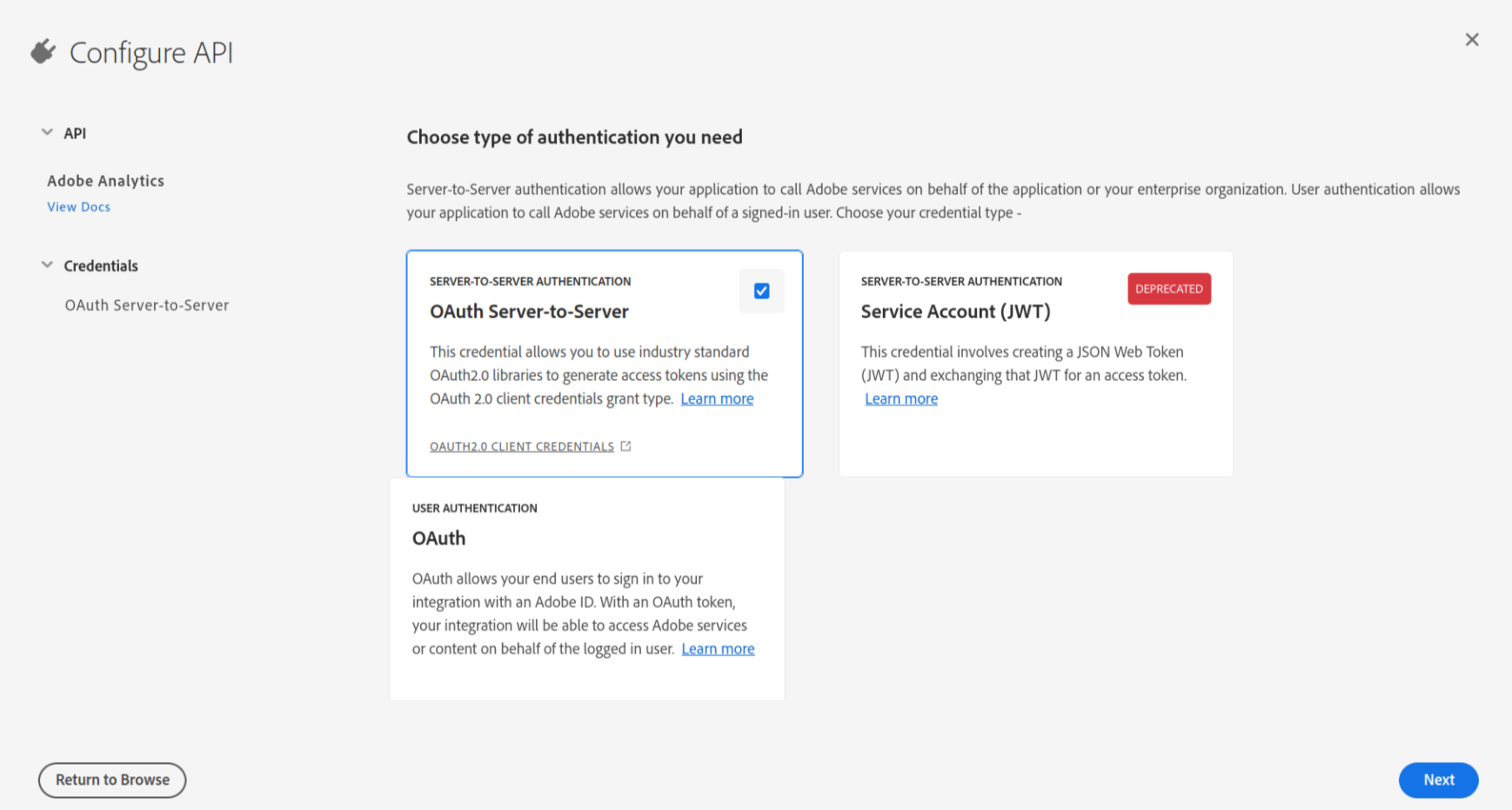
We use the Oauth2 authentication process.
{% hint style="warning" %}
Only the **server-to-server** oauth is supported
{% endhint %}
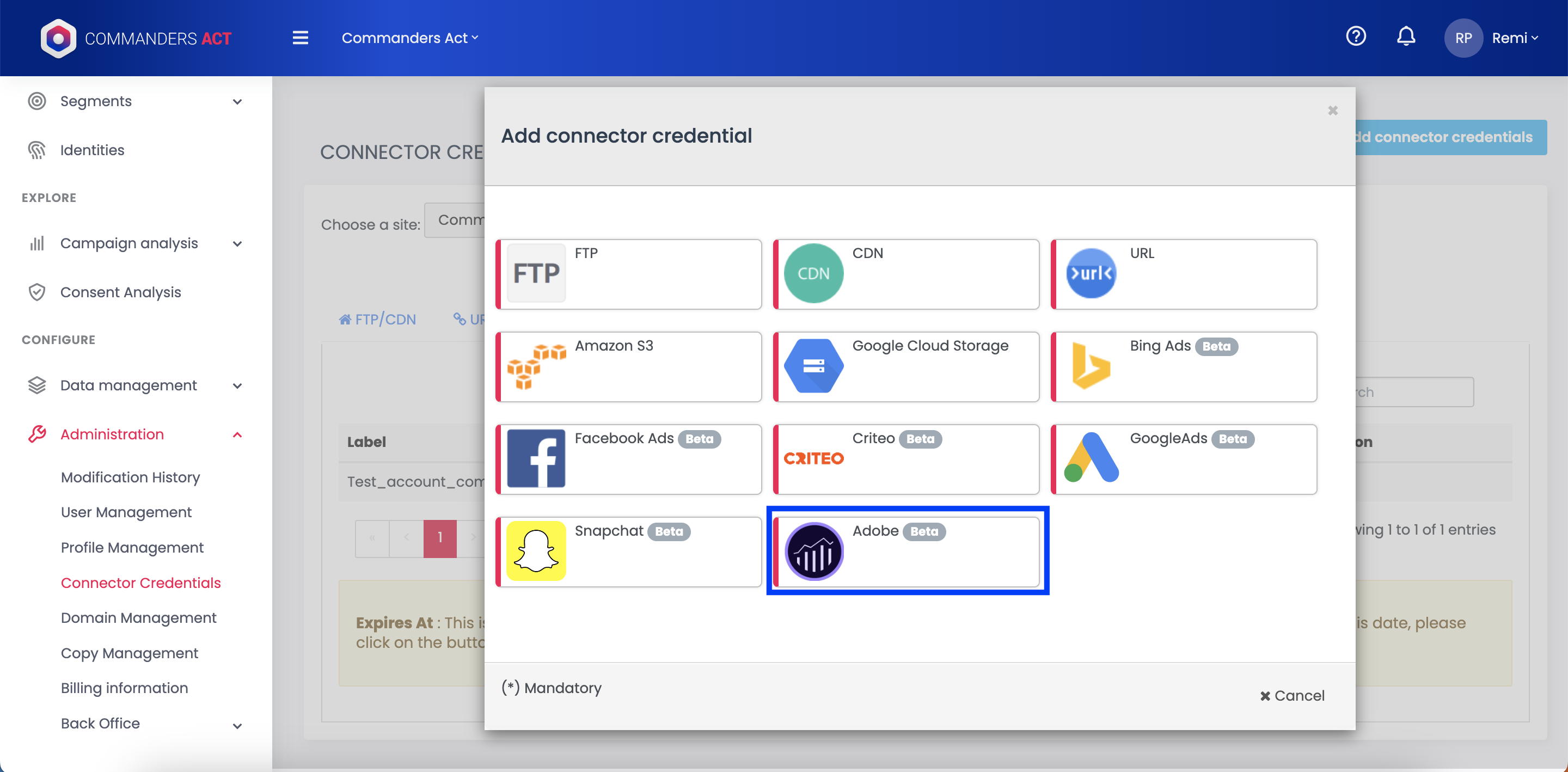
Go to *Administration* / *Connector Credentials* and click on **Add connector credentials**.\
Select Adobe Analytics.
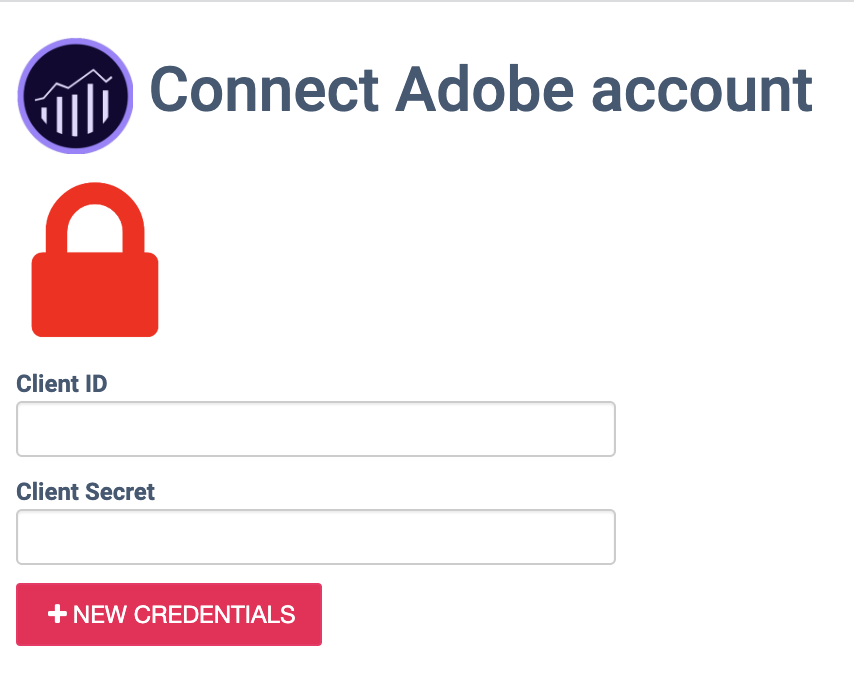
Enter the Client ID and Client Secret that you can find on your **Adobe Developer Console**.
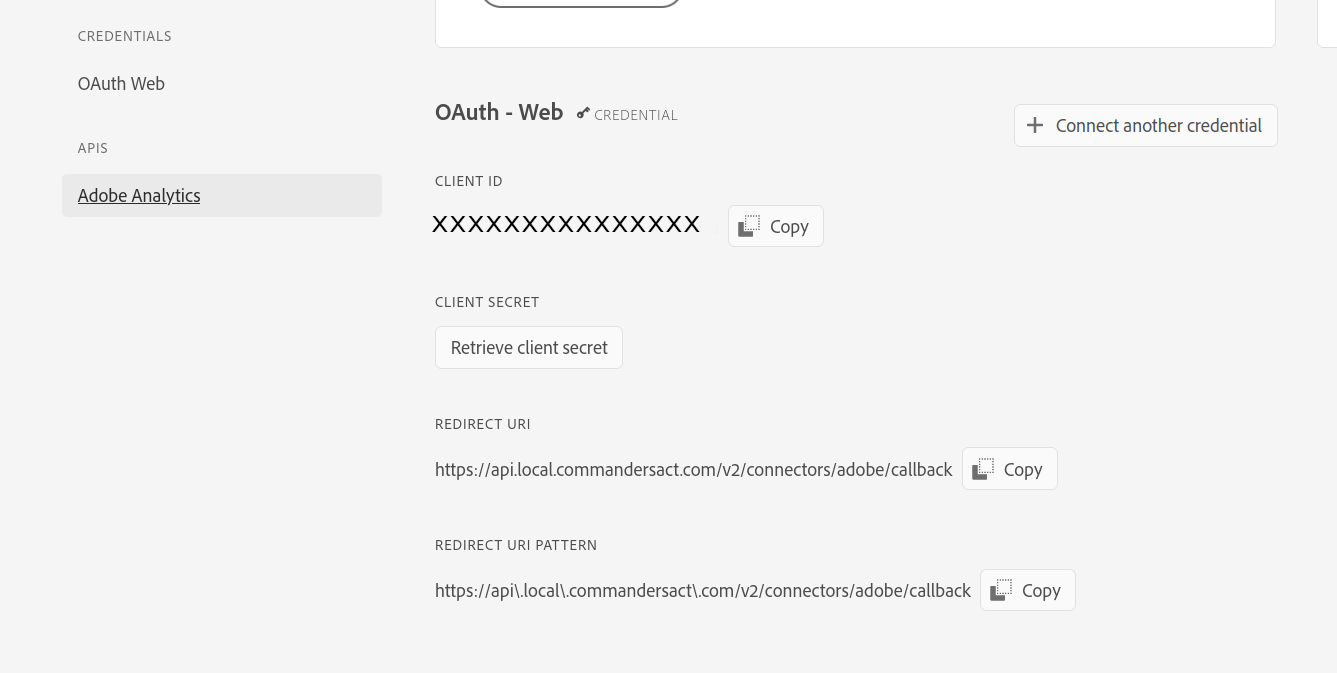
In case you haven’t selected the server-to-server oauth (if it is an old project, and you don’t want to configure it again for example), it is possible to change the authentication, click on “Connect another credential” on Adobe Analytics interface.
### Configuration
Click on *Destinations* / *Add destination* and select **Adobe Analytics** on the catalog.
Select sources, give a name to the destination and select the environment.
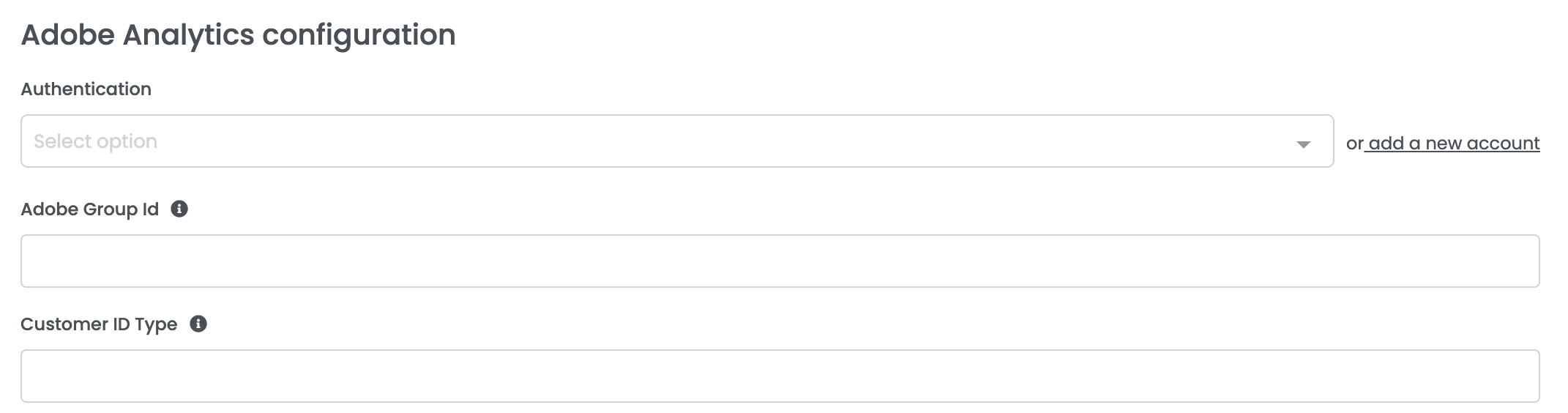
Select the authentication you've just created previously.
Fill the **Adobe Group ID** and **Customer ID Type** coming from your Adobe Analytics account.
#### **Mandatory parameters mapping**
This parameter is mandatory:
* userAgent
You can map corresponding properties or directly enter values.
#### **User id mapping**
At least one of these fields should be filled to identify users.
* visitorID
* marketingCloudVisitorId
* IP address
* CustomerID (CustomerIDType)
#### Page identifier mapping
Adobe web page identifier. You can set several, but at least one is needed for the export. If you set either linkName, linkURL or linkType the other two must be set as well.
#### Mapping
You can map here all your event properties to Adobe Analytics properties, especially eVars.
#### Properties transformation
This step is optional, you can transform your properties before to send it.
---
# Agent Instructions
This documentation is published with GitBook. GitBook is the documentation platform designed so that both humans and AI agents can read, navigate, and reason over technical content effectively. Learn more at gitbook.com.
## Querying This Documentation
If you need additional information that is not directly available in this page, you can query the documentation by asking a question.
Perform an HTTP GET request on the following URL with the `ask` and `goal` query parameters:
```
GET https://doc.commandersact.com/features/destinations/destinations-catalog/adobe/adobe-analytics.md?ask=&goal=
```
`ask` is the immediate question: it should be specific, self-contained, and written in natural language.
`goal` is what the user is ultimately trying to achieve, the reason they need the answer. Sharing it helps GitBook give you a better, more relevant answer. A goal is most helpful when it describes the outcome the user wants rather than restating the question. For example, with `ask=how do I create an API token`, a goal like `automate deployments from our CI pipeline` lets GitBook tailor the answer to that use case.
The response will contain a direct answer to the question and relevant excerpts and sources from the documentation.
Use this mechanism when the answer is not explicitly present in the current page, you need clarification or additional context, or you want to retrieve related documentation sections.